Saturday, October 19, 2013

SEGOVIA and MADRID

The Aqueduct of Segovia 
Aqueduct runs through the city
The curve of the arch - no mortar
One of the most amazing structures we’ve seen in all our travels is the Aqueduct of Segovia.  Built by the Romans in the 1st century, it is almost 3,000 feet long and 94 feet high at its highest point .  It carried water to the city from the a source in the mountains 11 miles away.  The 167 arches are made of 25,000 granite blocks joined without mortar and held together by force equilibrium.  
Segovia Cathedral

Alcazar
Segovia’s massive 16th  century cathedral is known as “The Lady of Cathedrals.” Situated in the main square of the city, it was the last Gothic church built in Spain.  


Kings Room Alcazar
The Alcazar of Segovia was has been a fortress, royal residence, prison and military academy. Today it is a museum and one of the most famous castles in Spain.  Supposedly, it inspired Cinderella's castle in Disney World.  

The Alcazar is designed like a ship, built around 2 courtyards and surrounded by a deep moat.  The rooms house antiquities, ancient artillery and works of art.  The ceilings are works of art in themselves.  In the Hall of Kings, the upper wall bordering the ceiling is lined with statuettes of Spanish monarchs.  
Our hotel in Segovia - former monastery


Plaza Mayor Madrid
The car trip portion of our journey came to an end in Madrid.  We said goodbye to our trusty Citroen after 5 months and 10 days on the road.  After returning the car to the leasing agent, we spent a few days in Madrid.  


The Royal Palace Madrid 
With a population of 3.3 million, the capital of Spain is a big, vibrant city. In fact, it is the third largest city in the European Union after London and Berlin. Madrid is a mixture of modern and historic.  Filled with museums and public plazas, it a wonderful city to explore on foot.  The largest square, Plaza Mayor, stands on the site of the medieval market.    
Almudena Cathedral

The Royal Palace with 3,418 rooms is one of the biggest palaces in Europe. Nowadays it is used for official functions only. The royal family reside in a more modest palace on the outskirts of the city.   
Ancient Egyptian Temple Madrid
The Prado Museum


Right across from the Royal Palace is the Almudena Cathedral, the only Spanish cathedral consecrated by a pope (Pope John Paul II in 1993).  Construction began in 1879 on the site of a medieval mosque that was destroyed in 1083 when the Spaniards defeated the Moors and reconquered Madrid.  The interior is beautiful and has a wide variety of art from historic to contemporary.  

One of the most unusual sites in Madrid is the Debod Temple.  The  2,000 year old temple was gifted to Spain by Egypt in appreciation for their help with dismantling and relocating the temples of Abu Simbel which would have been submerged when Lake Nassar was created.

Madrid deserves more than the few days we spent there.  We didn't have time to do more than walk by The Prado, a world famous art museum.   Perhaps next time!  Now it is on to Torremolinos and a few weeks in the sun.   


Monday, October 7, 2013

SANTIAGO DE COMPOSTELA and SALAMANCA


Front of the Cathedral of  Santiago
We visited many churches, cathedrals and basilicas on this trip but nothing compared to what we saw in Santiago de Compostela and Salamanca. 


The Botafumeiro - Incense Burner

The tomb of the Apostle James

Ornate sculptures adorn Cathedral towers

According to legend, the Apostle James brought Christianity to the Iberian peninsula in 44 AD. Upon his return to Jerusalem, he was martyred. Legend claims that two of his disciples brought his body back to Spain and buried it in what is now known as the city of Santiago de Compostela. The site of the tomb was forgotten over time but in 814 a local peasant rediscovered it. The bishop authenticated the relics and with that a Holy City and eventual World Heritage site was born.  


The Way of St. James became one of the most important Christian pilgrimages in medieval times. The giant incense burner in the Cathedral was used to overpower the odor of the early pilgrims.  Today   hundreds of thousands of modern day pilgrims make their way to the city as it is considered one of the most important Christian sites in the world.   

Salamanca's Roman bridge

Plaza Mayor: social center of Salamanca

One of Salamanca's many churches
Sunlight shimmers off sandstone buildings in Salamanca making the 'golden city' one of the most beautiful in Spain. A Roman bridge with 15 granite stone arches spans the Tormes River and leads into the city. It was built in 89 AD and reconstructed in the 17th century. 

University of Salamanca philosophy building
Numerous pedestrian walkways wander around and through the Old Town which was declared a World Heritage site in 1988. In the center, the huge Plaza Mayor is filled with shops, outdoor cafes and people.   
Birds make a home atop a bell tower
Birthday lunch in Salamanca

Salamanca is especially known for its old and new cathedrals, just 2 of many churches in the city, and its university.  Founded in 1812, the University of Salamanca is the oldest higher learning institution in Spain.  

Salamanca was a lovely place to spend my birthday. Beautiful city, ideal weather and a great lunch at a charming little restaurant. 


Our hotel with typical golden facade 


Saturday, September 28, 2013

NORTHERN COAST OF SPAIN and A CORUNA

The harbor runs into the center of Llanes
St. Peter's Coastal Walk
Spectacular coastal views along the walkway
The Green Coast runs along the northern border of Spain beside the Cantabrian Sea. Between the sea and the mountains is the lovely town of Llanes.   It has a medieval center, beautiful beaches and a scenic cliff top walk along the coast.  Known as St. Peter’s Walk, the seaside park was built in 1847 and provides a panoramic view of the town, coastline and mountains.  It also provided lookout points for spotting whales, fish and pirates. 
Unloading the day's catch
The colorful Cubes of Memory

Aside from tourism, fishing is a major industry in Llanes. One day we watched a fishing boat tie up at the pier and unload its catch for the day. The sea wall around the pier is composed of huge painted blocks  called the "The Cubes of Memory."  They are considered one of Spain's major works of public art.  


The Llanes Lighthouse
The lighthouse just across from the harbor was built in 1860.  Prior to that, bonfires were used to warn ships approaching land.  Good, dry wood was used at night to build high flames.  During the day, green wood was used so the smoke would rise as a warning signal.  Smoke signals were also used to alert townspeople of danger or the arrival of dolphins, whales and pods of fish.  


Basilica of Santa Maria
The Gothic church in the Old Quarter was built in the 1400s. It is a significant stopping point on the pilgrimage trail to Santiago de Compostela where we will soon be stopping.  

From Llanes, we drove west into Galicia, a province in the northwest corner of the Iberian peninsula.   Here we dipped down to A Coruna.  It too is in Galicia but the coastline has turned south and now runs alongside the Atlantic Ocean. 


Tower of Hercules Lighthouse
The Tower of Hercules stands at the end of the peninsula and the entrance to A Coruña harbor.  It has served as a lighthouse since the late 1st century A.D.  Built by the Romans, it was restored and augmented in the 18th century.  A World Heritage Site, the Tower of Hercules is the only lighthouse of Antiquity that has retained a measure of structural integrity and functional continuity. 
City Hall on Maria Pita Plaza
One of A Coruna’s other famous landmarks is Maria Pita square where the impressive City Hall is situated.  Adjacent to the old town, it is here that Maria Pita helped save the town from the assault of the English Armada led by Francis Drake in 1589. 
Promenade around A Coruna bay


At 10 km long (about 6 miles), the promenade around the bay and harbor of A Coruna was the longest in Europe when it was built.  We had a beautiful view of it from our room.    

Now we begin our journey inland as we gradually make our way to Madrid.

Thursday, September 19, 2013

HONDARRIBIA, SANTANDER and SANTILLANA DEL MAR

Hondarribia winds around the bay

Entering the old city
Former fisherman's home
Our first stop in Spain was Hondarribia in the Basque region of Spain just over the border from France.  It is best known for its historic walled city atop a hill overlooking the city and bay.  While the rich lived within the walls, the fishermen and workers had to live down the hill near the water. Today their homes have been converted into cute little shops and restaurants.  
Houses in the walled city


Flags celebrate Festival
During our visit, Hondarribia was celebrating its major annual festival honoring the Virgin of Guadalupe and a victory over the French in 1638. 
We walked around this peninsula in Santander
Next stop was Santander, the capital of Cantabria.  This is a fairly large city winding around a waterfront that claims to have one of the world's prettiest bays.  Over a dozen beaches and the downtown are connected by a long meandering promenade.  
Overlooking medieval town of Santillana del Mar

Shops & restaurants line cobblestone streets
Santa Juliana Collegiate
We spent a few days in the charming medieval town of Santillana del Mar. Narrow cobblestone streets branch out from the massive Santa Juliana Collegiate, a huge church built atop a 9th century monastery.   The town is the

Bison depicted in Altamira Caves
site of  the Altamira caves. Considered the Sistine Chapel of rock art, the cave contains the most famous prehistoric paintings and engravings in the world. They are renowned for their quality and the diversity of techniques and styles. Discovered around 1880, controversy raged into the 20th century because many experts did not believe prehistoric man had the intellectual capacity for such artistic expression.  But their authenticity and age have been confirmed.  Paintings here and at nearby caves are between 11,000 and 41,000 years old and belong to the Paleolithic period.  The quality of the art forever changed the perception of prehistoric man.  


Monday, September 9, 2013

WEST COAST OF FRANCE

September and the crowds have disappeared
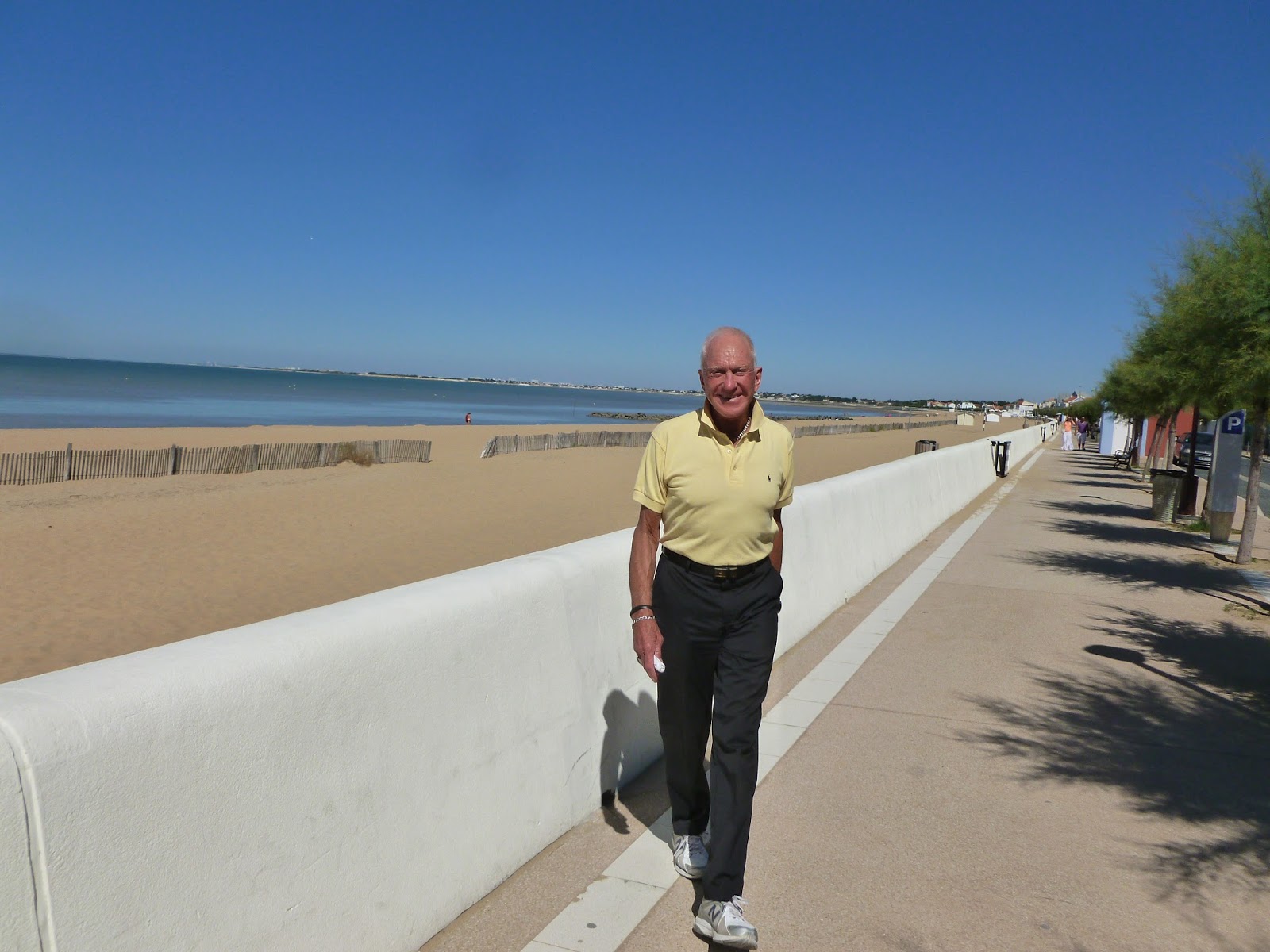
Atlantic Ocean, stretches of wide, white sandy beaches interspersed with rocky outcroppings, fishing villages and quaint beach towns compose the west coast of France.  We followed it from Brittany down to Spain making several stops along the way.  During that time, August turned into September and the crowds disappeared but not the sunshine and blue skies.   Consequently, this was one of the more relaxing portions of our trip.  We took long walks along the seaside and had leisurely lunches.  

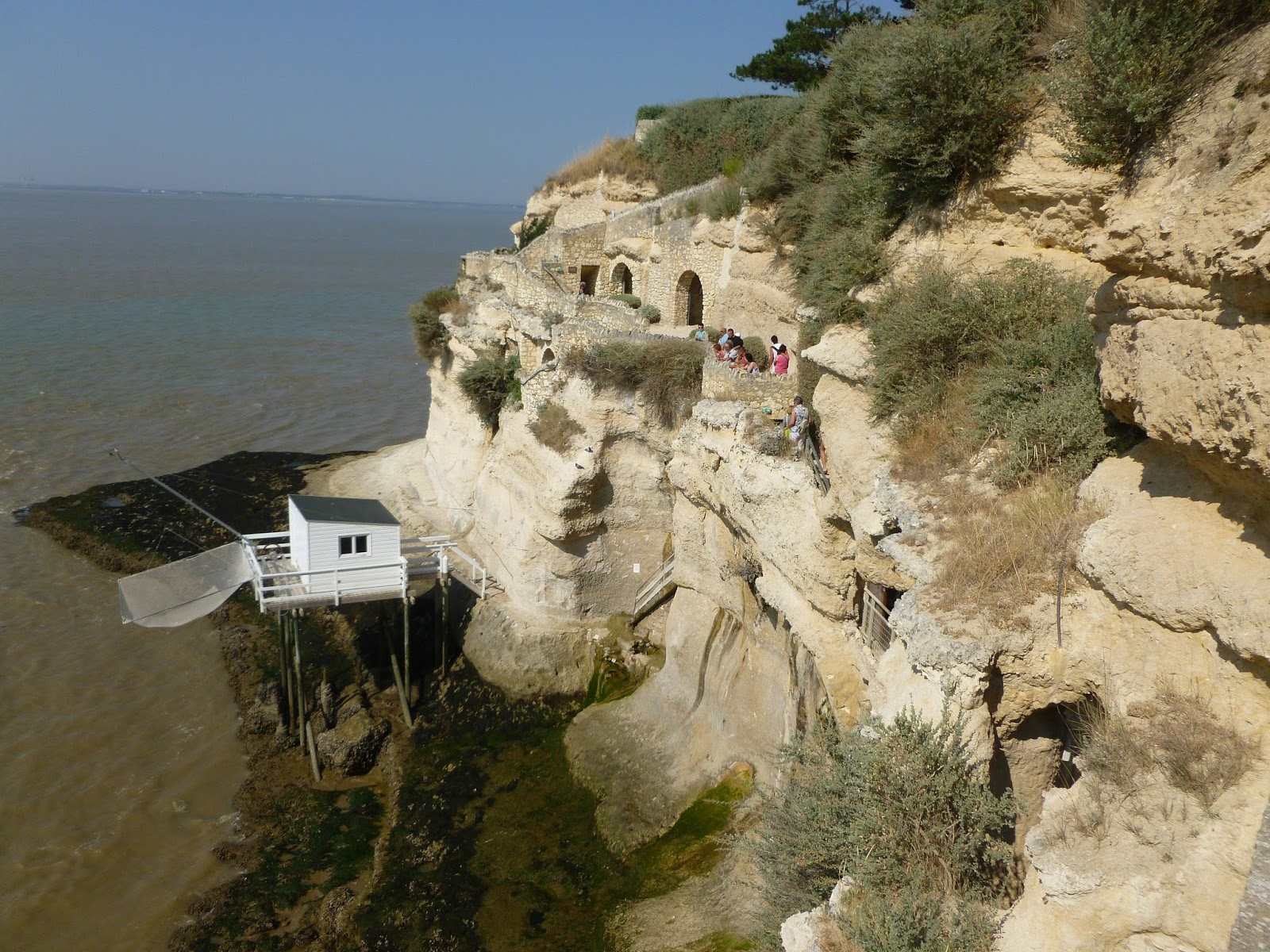
Limestone Grottoes on Gironde River
About midway down the coast in the area of Royan, the beaches wind around limestone cliffs that were formed about 65 million years ago with the birth of the Alps and the Pyrenees.  A little south of Royan on the bank of the Gironde River, you can visit  caves in the cliffs that were inhabited since prehistoric times.  
On holiday in the caves 19th century

19th century hotel room in the grottoes
Over the years, they became homes for fishermen and the poor, hiding places for pirates and Protestants. In the 19th century, the caves became popular with people on holiday.  The grottoes turned into small hotels and cafes. The last of the cafes is still open in Matata, the grottoes we visited.
Our hotel in Arcachon

Our final stop in France was the town of Arcachon.  I don't know what we liked more - the town or our lovely suite with kitchenette overlooking a popular square. We bought fresh fruit and quiche at the market to make a truly French lunch.   
The fruits and vegetables are colorful and delicious
Market in the square outside our window

 Arcachon Bay is lined with beaches and oyster farms and surrounded by forests and natural habitats.  The town of Arcachon is on one side of the bay and Cap Ferrat on the other. 
We climbed this to see...
a panoramic view of Arcachon city and bay
Dune du Pilat
 Slightly south of Arcachon is Europe's largest sand dune, the Dune du Pilat.  It is about 2 miles long, 1,600 feet wide and over 300 feet high.  It is beautiful but a little scary in that it moves inland at a rate of 15 feet a year. This is a problem all over the world with 15 million acres of new desert being created each year. 

After 53 nights in France, it is time to say Auvoir and head into Spain.